Qatar Charity Opens “Al Adaam” Camp to Shelter Displaced People in Lebanon
Qatar Charity inaugurated the “Al Adaam” camp in Lebanon under the patronage and in the presence of the Lebanese Minister of Social Affairs, Dr. Haneen Sayed. The opening was also attended by Mr. Mohammed Zahra, Director of Qatar Charity’s Lebanon Office. The camp aims to provide temporary, safe shelter for 640 displaced people from affected families forced to leave their homes in southern Lebanon.
The project responds to the needs of families whose homes have been destroyed or damaged beyond habitability. It provides temporary accommodation in prefabricated housing units (caravans) until their homes can be repaired or rebuilt, or permanent housing alternatives become available.
Speaking at the opening, the Lebanese Minister of Social Affairs, Dr. Haneen Sayed, affirmed that the State of Qatar has consistently stood by Lebanon. She noted that the project allows families to move from sheltering in schools to better accommodation that preserves their dignity and privacy.
For his part, Mr. Hassan Bazzi, Mayor of Froun, thanked Qatar Charity for completing the project, explaining that it will provide housing for more than 19 families who have lost their homes, ensuring their privacy and dignity.
The project forms part of Qatar Charity’s efforts to address winter-related risks and respond to urgent humanitarian needs in Lebanon, with a focus on providing temporary shelter that preserves the privacy and dignity of affected families during displacement.
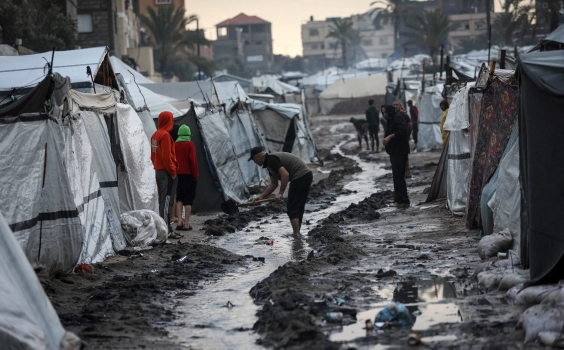
Affected families face challenges that extend beyond the loss of their homes, including rising rental costs and disruptions to essential services, alongside pressure on shelters and host communities.
UN Figures Highlight the Scale of Humanitarian Needs
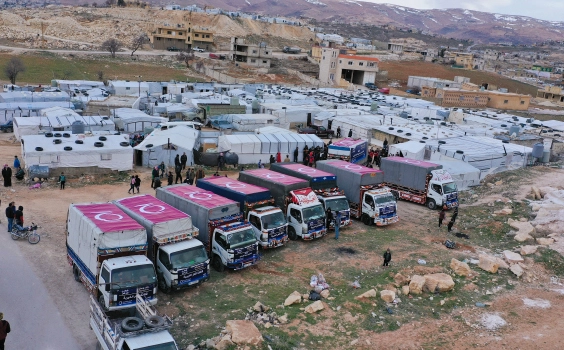
According to updates from the United Nations Office for the Coordination of Humanitarian Affairs (OCHA), approximately one million people had self-registered as displaced since the escalation began in Lebanon, based on figures from June 2026. As of 2 July 2026, around 500,000 people remained displaced, including 47,143 people in 430 collective shelters, despite the return of hundreds of thousands to their areas of origin.
These updates describe the humanitarian crisis as severe and volatile, amid continued displacement and damage to infrastructure and essential services. They also indicate that returns remain limited and fraught with risks due to security incidents, damaged homes, disrupted services and explosive remnants of war—factors that hinder safe, voluntary and dignified return.
Temporary Housing and Essential Services
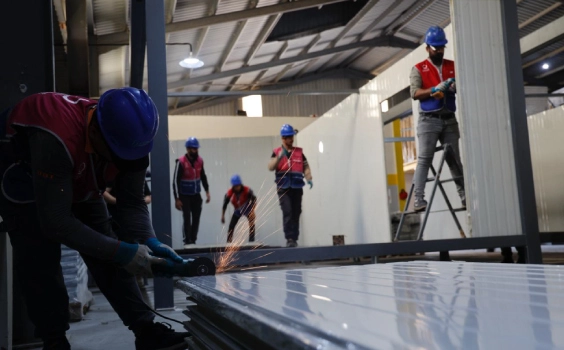
The camp comprises prefabricated housing units equipped with basic living necessities, including lighting, electrical outlets and suitable sanitation facilities, as well as safe spaces that respect the privacy of beneficiary families. This shelter is intended as a transitional solution, not a substitute for permanent housing.
Relevant Lebanese national and local authorities and institutions were consulted to select the site and identify eligible families, using clear and transparent criteria that prioritize those most in need. The project also takes account of protection and psychological well-being needs, particularly those of children, women, older people and persons with disabilities, to reduce the risks associated with repeated displacement and living in unsafe or unsuitable conditions.
Supporting Stability Until Permanent Solutions Are Available
The “Al Adaam” camp aims to ease the burdens of displacement and rental costs and reduce overcrowding in shelters. It also seeks to support family and social stability and enable families to remain close to their areas of origin until they can repair or rebuild their homes.
Transitional shelter solutions are important because families need time to complete repairs and reconstruction, while coping with the financial, social and psychological burdens of losing their homes.
The project is expected to improve temporary living conditions and reduce the health and social risks associated with displacement, pending the conditions needed for a safe return and the availability of permanent housing solutions.